Duck Pond in the Kingwood Center Gardens
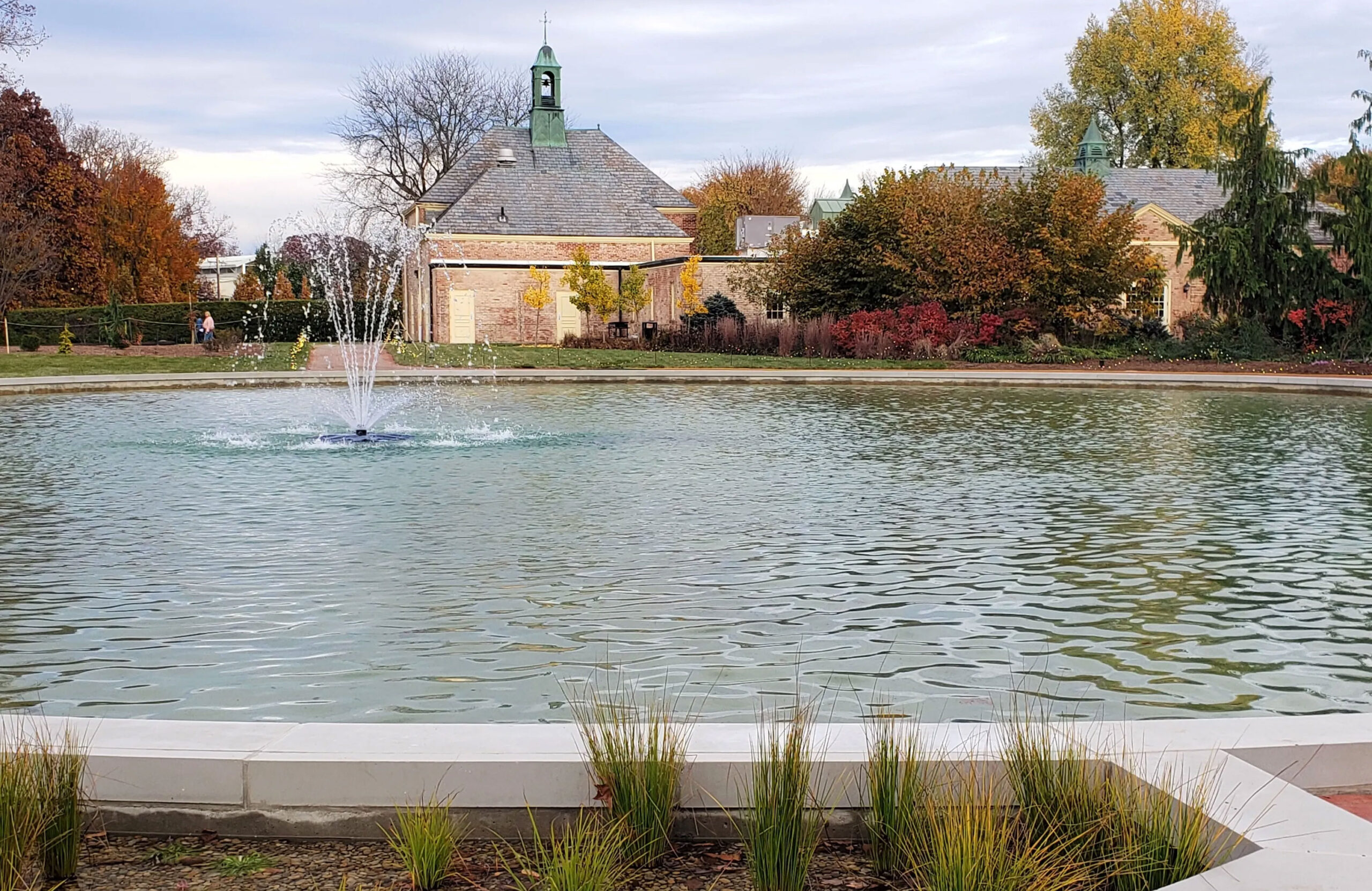


Kingwood’s Duck Pond
Project #2
Stopping the Leaks: How Israeli Filtration Made Kingwood’s Duck Pond a Model of Water Reuse
Kingwood Center Gardens’ Duck Pond in Mansfield has charmed visitors for generations, yet by 2022 the 300,000-gallon basin was losing water through wide cracks in its century-old concrete liner and the once-clear surface had turned cloudy and algae-prone. Rather than simply patch the structure, garden staff set out to make the landmark a model of resource stewardship by recycling, rather than constantly replacing, its water.
Because Kingwood lacked in-house expertise with reuse technology, the team asked the Ohio-Israel Ag & Cleantech Initiative (OIACI) to help scout solutions. The OIACI is a Cleveland based non-profit that helps build bi-lateral ties between Ohio and Israel. The initiative introduced the garden to three Israeli companies, after which Kingwood selected Odis Filtering as the technical partner. OIACI stayed engaged through installation, coordinating with the U.S. integrator Atlanta Pure Water and confirming that the treatment system went online in autumn 2022. The result is a demonstration of how an Ohio nonprofit can broker international know-how for a very local challenge.
I wanted to take a minute to thank the Ohio-Israel Initiative and Odis Filtering for ALL your assistance designing a new filtration system for Kingwood’s Duck Pond. This was a unique project that required a unique solution. Odis’s filtration system worked well alongside our constructed wetland biofiltration process. From initial system design, to install, to system fine tuning, to parts and service, you have been great to work with. You are a true collaborative partner in helping our system to meet its mission requirements. Thank you for your ongoing support.
~Josh Steffen, Executive Director, Kingwood Center Gardens
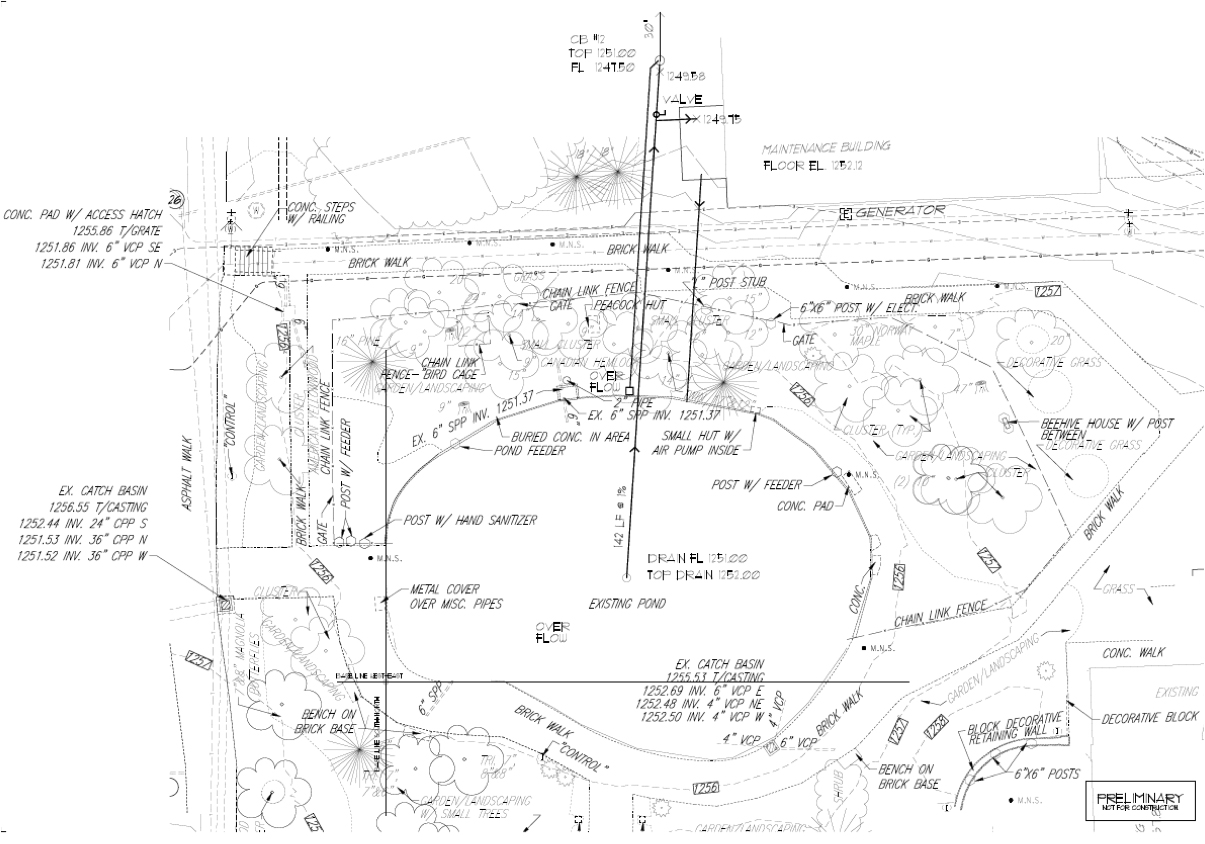
The heart of the upgrade is a 140-gallon-per-minute recirculation train: an intake strainer keeps leaves and feathers out; an automatic self-cleaning screen filter removes fine solids; quad deep-bed multimedia filters with a coagulant mix polish the flow; and an alarming system allows staff to know in real time if any adjustments need to be made. Treated water meanders back to the pond through a newly landscaped creek and a constructed-wetland shelf, where aquatic plants provide a final biological polish before the water rejoins the main basin.
After its first year, the system eliminated the need for near-continuous top-ups, ended nuisance blooms in a downstream drainage pond, and restored enough clarity that visitors can see fish and lilies even during midsummer heat. Garden managers point to additional benefits: lower operating costs than daily make-up pumping, a living STEM exhibit visible through the visitor-center windows, and a public proof-of-concept for decentralized reuse infrastructure.
 Funding combined private donations, trust resources and an in-kind engineering allowance that OIACI negotiated with the vendor team. By guiding vendor vetting, import logistics and regulatory questions, the initiative let Kingwood’s horticulturists stay focused on aesthetics and habitat, illustrating the practical value of a bilateral broker in a small-scale capital project.
For Ohio communities that maintain ornamental lakes, golf-course water features or storm-water amenity ponds, the Duck Pond retrofit shows that closed-loop treatment can stop six-figure-gallon losses each season, curb algae without chemicals and engage the public in water-quality storytelling—without the need for a full wastewater-plant overhaul. It also shows how an Ohio-Israel partnership can translate high-tech solutions to on-the-ground wins.
Ready to tackle your toughest water challenges?
Contact Aryeh Canter, Director of OIACI, at acanter@negev.org for Israeli-driven answers.

